Calm, Comfortable Care: Can Sedation Dentistry Help Patients with Special Needs?
November 16, 2026
URL Slug: /blog/sedation-dentistry-for-patients-with-special-needs
Calm, Comfortable Care: Can Sedation Dentistry Help Patients with Special Needs?
Every patient deserves dental care that fits their unique needs. For children with physical disabilities, developmental conditions, or sensory sensitivities, a typical dental visit can feel overwhelming, for both the child and the parent. That’s where sedation dentistry for patients with special needs can make a real difference. Here’s how sedation can help create a calmer, safer, and more positive experience.
Why Dental Visits Can Be Challenging
The dental office is full of new sights, sounds, smells, and sensations. Bright lights, buzzing instruments, and having someone’s hands in your mouth can be a lot to process, especially for patients with autism or sensory processing differences. Others may have trouble sitting still, controlling their movements, or communicating discomfort. These challenges can make it hard to complete even routine care, and delays in treatment can allow small problems to grow.
How Sedation Dentistry Helps Patients with Special Needs
Sedation uses medication to help patients feel relaxed and comfortable during treatment. For patients with special needs, it offers several important benefits:
- Less fear and anxiety: Sedation eases stress so patients can stay calm throughout their visit.
- Reduced sensory overload: A relaxed state can make sounds, lights, and textures much easier to tolerate.
- Greater safety: Sedation helps limit sudden or involuntary movements, lowering the risk of injury during treatment.
- More care in fewer visits: When a patient is comfortable, the dental team can often complete more treatment at once, reducing the number of appointments needed.
- Better long-term oral health: Positive experiences make it easier to keep up with regular checkups and prevent future problems.
Types of Sedation
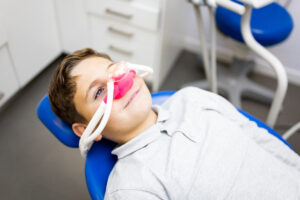
The right level of sedation depends on each patient’s needs, health history, and the treatment required. Nitrous oxide, or “laughing gas,” is a mild option that helps patients relax while staying awake. Oral conscious sedation, taken as a pill or liquid, provides deeper relaxation while the patient can still respond. For more extensive treatment or significant challenges, IV sedation administered by an anesthesiologist may be recommended. With any type of sedation, your child’s breathing, heart rate, and oxygen levels are carefully monitored by trained staff.
Is Sedation Always Necessary?
Not every patient with special needs requires sedation. With patience, a sensory-friendly environment, and gentle step-by-step introductions, many children do well during routine visits without it. A dentist experienced in special needs care will take time to understand your child and recommend sedation only when it’s truly the best option.
Tips for Parents and Caregivers
Share your child’s full medical history, medications, and any sensory triggers or calming strategies with the dental team ahead of time. Follow all pre-appointment instructions carefully, such as guidelines on eating and drinking before sedation, and plan for a quiet, restful day afterward. Bringing a favorite toy, blanket, or pair of headphones can also help your child feel more at home in the dental chair.
About the Practice
Wylie Children’s Dentistry in Wylie, Texas, provides gentle, individualized care for children, including those with special needs. Dr. Pearson offers nitrous oxide and oral conscious sedation, and IV sedation is provided on-site by a board-certified medical anesthesiologist. To learn more about sedation options for your child, call (972) 429-7070 or contact us to schedule a visit.